Bedroom Studio Blueprint: Best Budget Audio Interfaces in 2026 for less than $250
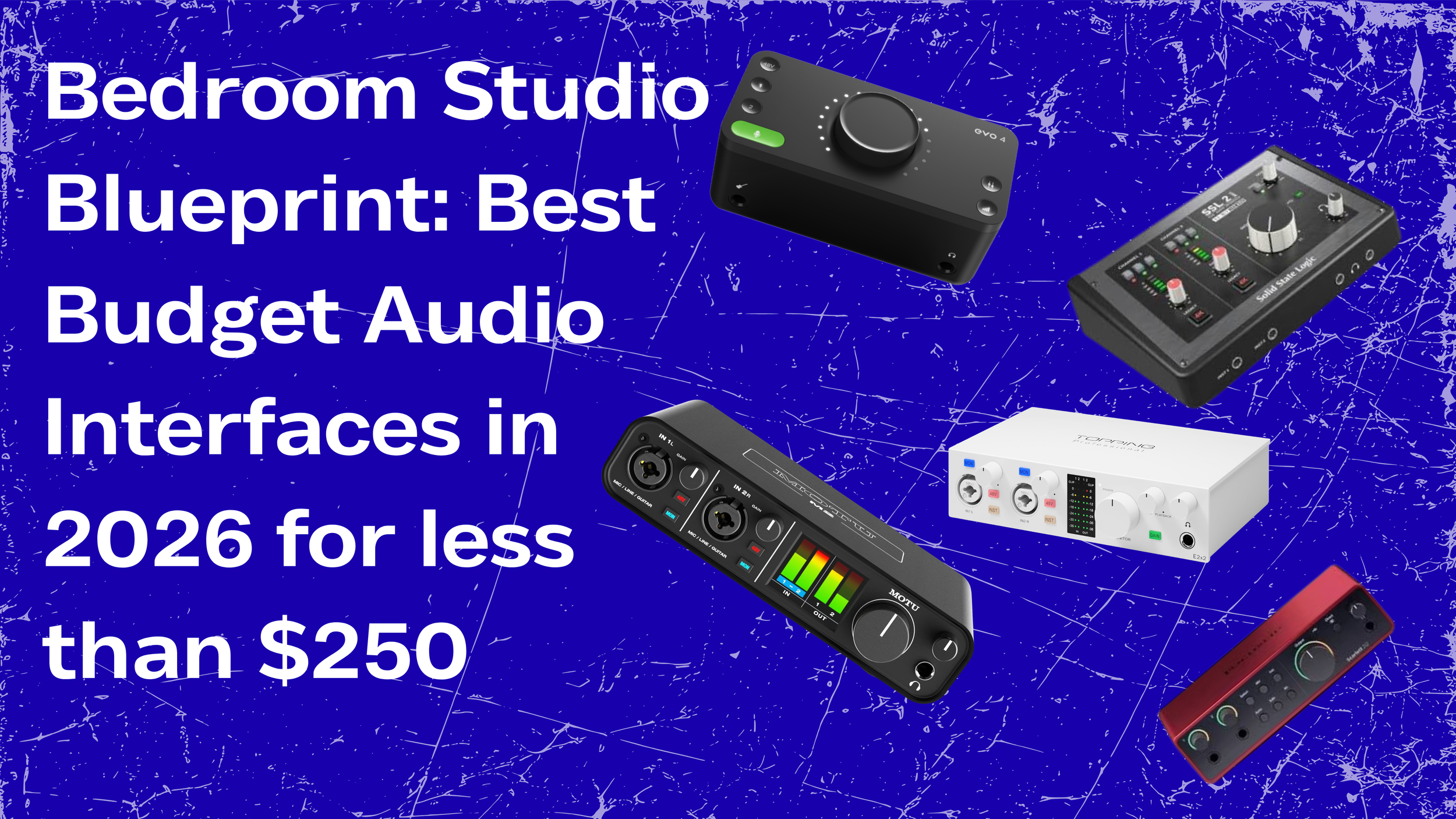
Prices shown are Sweetwater USD as of 16 September 2026 and move around a lot. Check before you buy.
Your interface is the front door of your studio. Every vocal, every guitar take, every synth line passes through it before it becomes a file on your hard drive. Get this piece wrong and you spend the rest of the mix trying to fix something that should have sounded good on the way in. The good news is that in 2026 the gap between a $180 interface and a $1,800 one is smaller than it has ever been.
Every interface on this list has two inputs, and that is deliberate. A single-input box is cheaper and it will get a vocal down, but the moment you want to record anything in stereo you are stuck. A pair of overheads on a drum kit, a stereo keyboard or synth output, a room mic alongside a close mic, two mics on an acoustic guitar, or just you and a friend playing at the same time. Two inputs costs you very little extra now and saves you buying a second interface in a year. Here are five that deserve your money.
1. MOTU M2
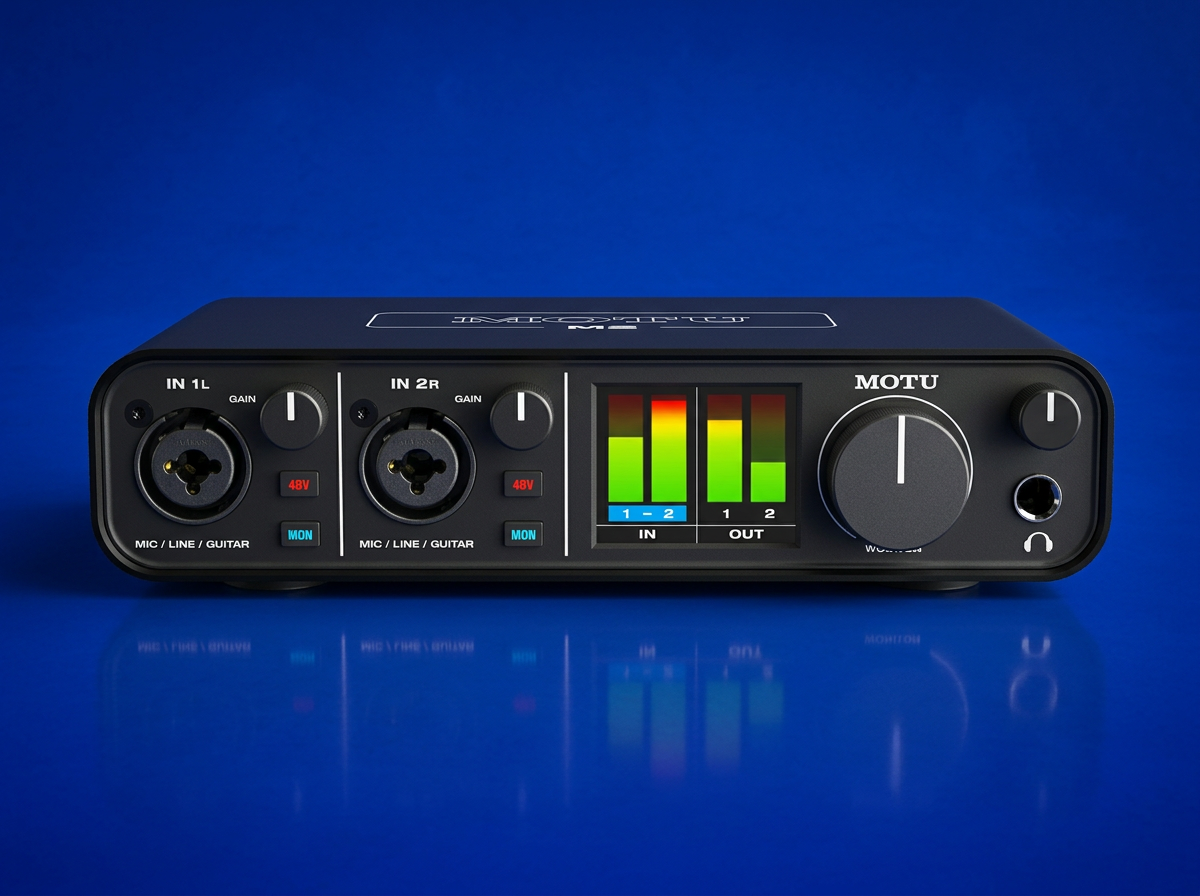
$199.95 | Sweetwater
Inputs: 2 combo XLR/TRS with mic preamps and phantom power
Conversion: 24-bit/192kHz, ESS Sabre32 Ultra DAC
Dynamic range: 120dB
Connectivity: USB-C, bus powered
Unique features: full-colour LCD metering, one-touch hardware monitoring, MIDI in/out, loopback, DC-coupled outputs
This is the one I use, and it is the one I keep recommending. It is fast, and you feel that when you are tracking guitar through amp sims at 2am and there is no perceptible delay between your hand and your ear. The full-colour LCD on the front is not a gimmick either. Being able to see your levels properly without opening a window on your computer speeds up the boring part of recording. The ESS Sabre converters are genuinely excellent for the money, and the two DC-coupled outputs mean you can send CV to modular gear later if you go down that road. If you are a solo artist recording yourself, one or two sources at a time, and you want a clean, uncoloured capture that you shape later in the box, this is the default answer.
Best for: the solo bedroom producer who wants transparency, speed, and no drama.
2. Audient EVO 4
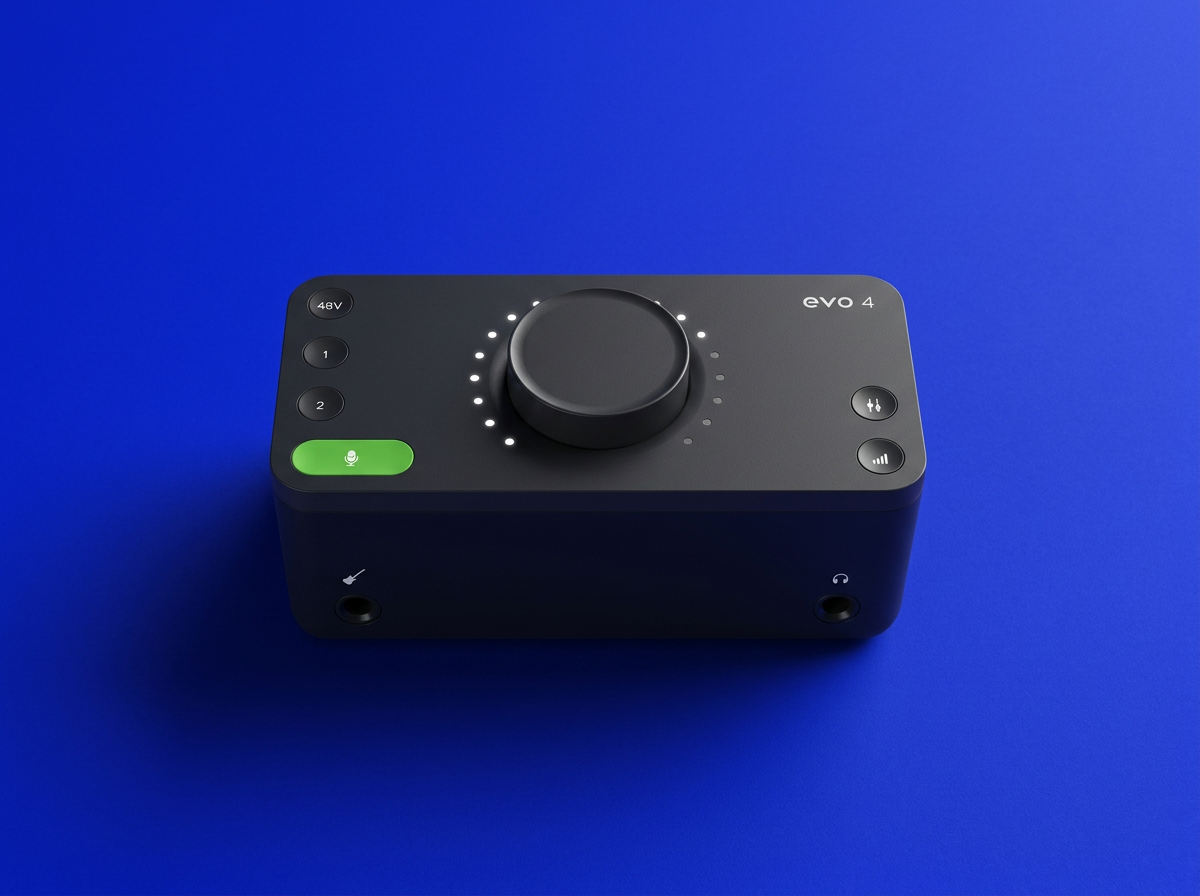
$179.00 | Sweetwater
Inputs: 2 combo inputs with EVO mic preamps and phantom power, plus 1 JFET instrument input
Conversion: 24-bit/96kHz
Dynamic range: 113dB
Connectivity: USB 2.0, bus powered
Unique features: Smartgain automatic level setting, loopback with built-in mixer, EVO Control app, headphone output, stereo monitor outs
If you have never recorded before, start here. The Smartgain feature is the reason. You press one button, the unit listens while you sing or play, and it sets your input level for you. That sounds like a small thing until you remember that the single most common way a first recording gets ruined is clipping, and the second most common is a level so low it is all noise when you bring it up. Smartgain removes the problem entirely while you learn what a good level actually looks like. The JFET instrument input is the other quiet highlight. It adds a small amount of colour on the way in, so guitars and basses arrive already sounding like something rather than a thin DI. Yes, it tops out at 96kHz instead of 192kHz, but if anyone tells you that matters for a bedroom record, ignore them.
Best for: the total beginner, and anyone who wants to spend their energy on the song instead of the gain staging.
3. Focusrite Scarlett 2i2 4th Gen
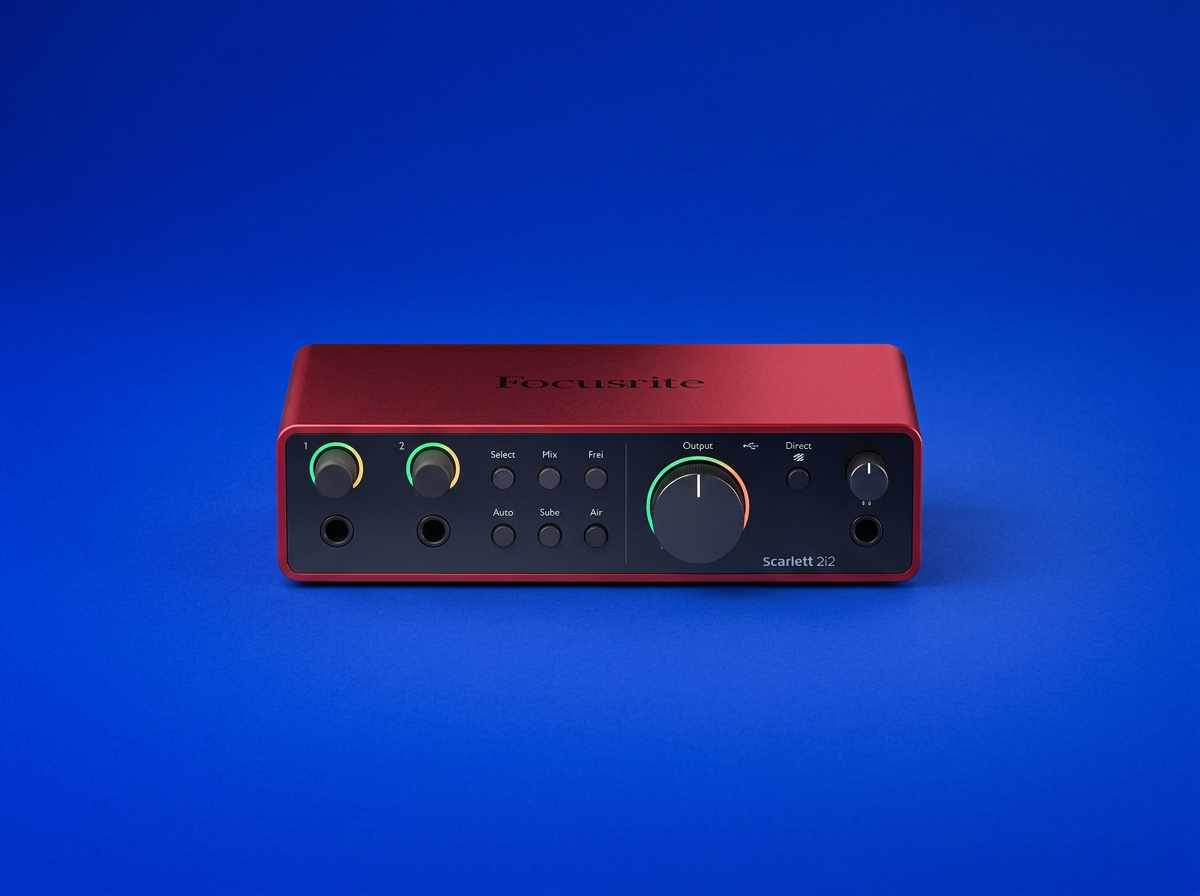
$224.99 | Sweetwater
Inputs: 2 combo XLR/TRS with 4th-gen mic preamps, 69dB of gain, hi-Z instrument and line inputs
Conversion: 24-bit/192kHz, RedNet-derived converters
Dynamic range: 120dB
Connectivity: USB-C, bus powered
Unique features: Auto Gain, Clip Safe, Air mode, Dynamic Gain Halos, loopback, Easy Start, Hitmaker Expansion software bundle
The 2i2 is the interface that half the people reading this already own, and the 4th generation is the first one in a while that earns an upgrade on merit. The converters are pulled from Focusrite's RedNet line, which is genuinely pro-tier hardware, and the preamps now push 69dB of gain, enough to drive a Shure SM7B without a cloud lifter. Clip Safe is the standout: it monitors your input up to 96,000 times a second and pulls the gain back if you are about to clip, which is a safety net rather than a replacement for knowing what you are doing. Air mode adds high-end presence in a way that flatters vocals without sounding harsh. The reason to buy a Scarlett over anything else on this list is the boring one: every tutorial, every forum thread and every friend who records already knows this box. When something goes wrong at 1am, the answer is one search away.
Best for: anyone who values a huge support community, and guitarists who want hi-Z inputs that feel like plugging into an amp.
4. Topping E2x2
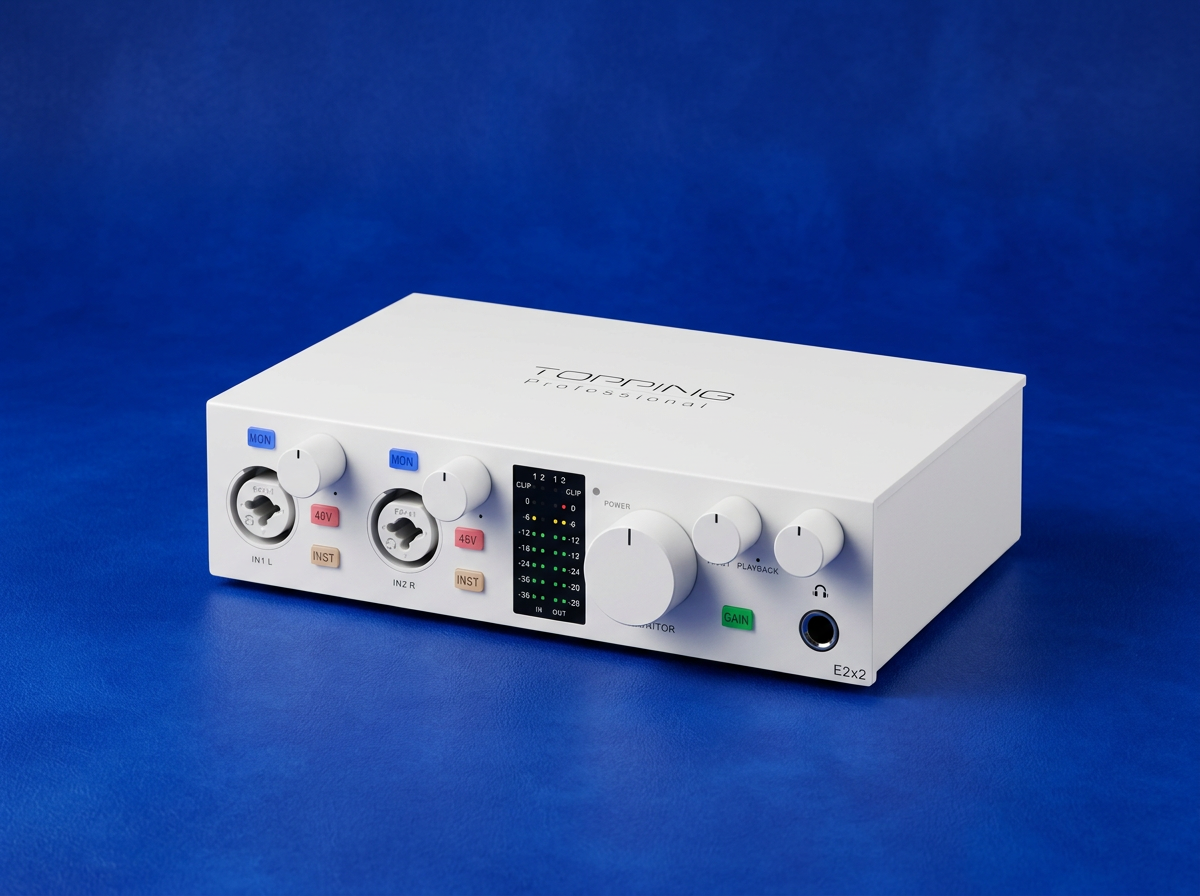
$159. Not stocked by Sweetwater. Available from Amazon.
Inputs: 2 combo XLR/TRS, mic/line/instrument, 58dB analogue gain plus 20dB digital gain, 48V phantom power
Conversion: 24-bit/192kHz
Dynamic range: 115dB
Mic preamp noise: -130.5dBu EIN, A-weighted
Frequency response: 20Hz to 40kHz, +/- 0.2dB on the mic input
Connectivity: USB, bus powered
Unique features: 580mW per channel headphone amp at 32 ohms
Topping built its reputation in hi-fi, making DACs and headphone amps that measure like gear costing five times as much, and the E2x2 is that engineering culture pointed at recording. Look at the numbers. A mic preamp noise floor of -130.5dBu and a frequency response flat to 40kHz are specs you normally see on units well past the $500 mark. The headphone amp is the part that will surprise you most: 580mW per channel is enough to drive high-impedance studio headphones properly, which almost nothing at this price can do. The caveat is honest. Topping has a short track record in pro audio compared to Focusrite or SSL, the driver and software ecosystem is less mature, and US availability is patchy. This is the enthusiast option for someone who reads spec sheets for fun and is comfortable being slightly early to something.
Best for: the measurement nerd, and anyone who mixes on demanding headphones.
5. Solid State Logic SSL 2 MKII
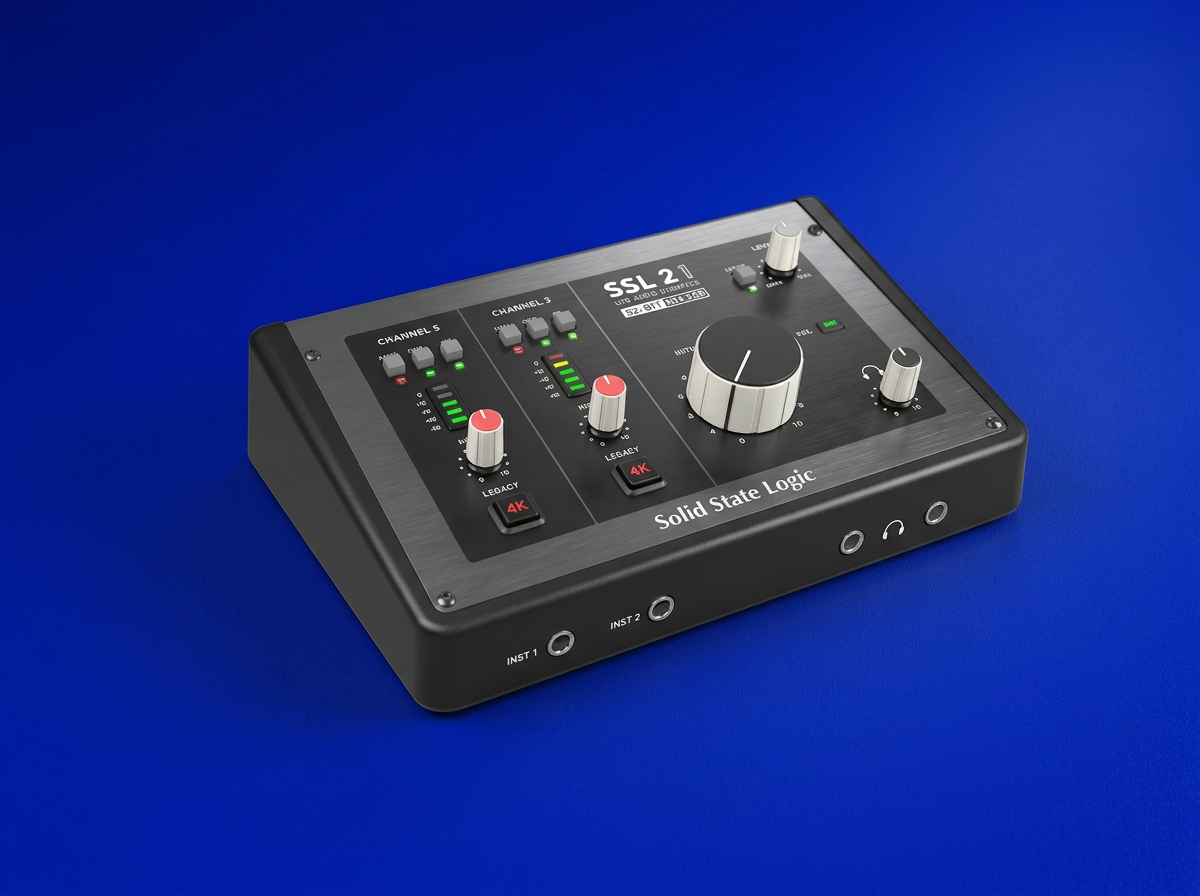
$229.99 | Sweetwater
Inputs: 2 Neutrik combo XLR/TRS, mic/line/instrument, 64dB of gain, auto-detect instrument inputs
Conversion: 32-bit/192kHz
Dynamic range: 116.5dB on the mic preamps, 120dB on the outputs, 119.5dB on the headphone outs
Mic preamp noise: -130.5dBu EIN, A-weighted
Connectivity: USB-C, bus powered
Unique features: Legacy 4K analogue enhancement circuit, two headphone outputs, switchable high-pass filters, loopback, SSL Production Pack software
SSL consoles are the desks that recorded a frightening percentage of the music you love, and the 4K button on this thing is the closest you will get to that sound for $230. It is not an emulation running in software. It is an analogue circuit that adds a controlled amount of harmonic distortion plus a forward high-frequency lift, and on a dull vocal or a flat acoustic guitar it does in one button press what would take you three plugins and twenty minutes. Two headphone outputs is the underrated feature here: if you ever record a friend, you both need to hear the take, and almost nothing else at this price gives you that. The 32-bit converters and the Neutrik connectors and Alps pots also mean this is built like something that will outlast your current laptop. Worth knowing that the 4K circuit is baked in when you engage it, so you have to commit to what you’re recording.
Best for: people chasing a classic console sound, and anyone who records with another person in the room.
So which one?
If you want one sentence each: get the EVO 4 if you are starting from zero, the M2 if you want the cleanest and fastest capture, the Scarlett 2i2 if you want the safest and best-supported choice, the E2x2 if you care about measurements and headphones, and the SSL 2 MKII if you want that console sound without a console.
None of these will make a bad song good. All of them will get a good song onto your hard drive without excuses. Pick one and go make something.